

Complex Regional Pain Syndrome (CRPS)
Complex regional pain syndrome (CRPS) is a chronic pain condition most often affecting a limb (arms, legs, hands, or feet), usually after an injury or trauma. It’s believed CRPS is caused by damage to or a malfunction of the peripheral and central nervous systems. The central nervous system is composed of the brain and spinal cord. The peripheral nervous system involves sending nerve signals from the brain and spinal cord to the rest of the body. CRPS is characterized by prolonged or excessive pain, and mild or dramatic changes in skin color, temperature, and/or swelling in the affected area.
There are two similar forms, called CRPS-I and CRPS-II, with the same symptoms and treatments. CRPS-II (previously called causalgia) is the term used for patients that have confirmed nerve injuries. Individuals without a confirmed nerve injury are classified as having CRPS-I (previously called reflex sympathetic dystrophy syndrome). Some research has identified evidence of nerve injury in CRPS-I, so the validity of the two different forms is being investigated.
Doctors aren’t sure what causes some individuals to develop CRPS. In more than 90 percent of cases, the condition is triggered by a clear history of trauma or injury. The most common triggers are fractures, sprains/strains, soft tissue injury (such as burns, cuts, or bruises), limb immobilization (such as being in a cast), or surgical or medical procedures (such as needlestick). CRPS is an abnormal response magnifying the effects of the injury. In this respect it is similar to an allergy. Some people respond excessively to a trigger that causes no problem for other people.
CRPS symptoms can vary in severity and duration. Studies of the incidence and prevalence of the disease show that most cases are mild and individuals recover gradually with time. In more severe cases individuals may not recover and may have long-term disability.
Who can get Complex Regional Pain Syndrome?
Anyone can get Complex Regional Pain Syndrome. It can strike at any age and affects both men and women. It is much more commonly found in women. The average age of affected individuals is about age 40. CRPS is rare in the elderly. Children do not get it before age 5 and only very rarely before age 10, but it is not uncommon in teenagers.
Lorem ipsum dolor sit amet, consectetur adipiscing elit. Ut elit tellus, luctus nec ullamcorper mattis, pulvinar dapibus leo.
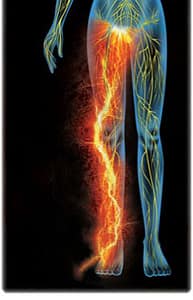
The key symptom: prolonged pain that may be constant, and extremely uncomfortable
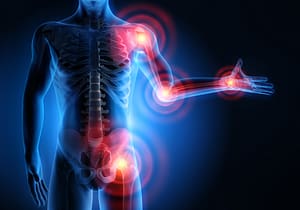
Most cases of CRPS are caused by a clear history of injury or trauma.
What are symptoms of Complex Regional Pain Syndrome?
The key symptom is prolonged pain that may be constant and can be extremely uncomfortable or severe. The pain may feel like a burning, “pins and needles,” or as if someone is squeezing the affected limb. The pain can spread to include the entire arm or leg, even if the original injury was to a finger or toe. Pain can sometimes travel to the opposite extremity. There is often increased sensitivity in the affected area. Such as a light touch or slight contact with the area becoming painful (called allodynia).
People with CRPS also experience constant or intermittent changes in temperature, skin color, and swelling of the affected limb. Abnormal microcirculation caused by damage to the nerves controlling blood flow and temperature can be the cause. An affected arm or leg may feel warmer or cooler compared to the opposite limb. The skin on the affected limb may change color, becoming blotchy, blue, purple, pale, or red.
Other common symptoms of CRPS include:
- changes in skin texture on the affected area
- abnormal sweating pattern in the affected area or surrounding areas
- changes in nail and hair growth patterns
- stiffness in affected joints
- problems coordinating muscle movement, decreased ability to move the affected body part
- abnormal movement in the affected limb, most often fixed abnormal posture (called dystonia) but also tremors in or jerky movement of the affected limb.
How is CRPS diagnosed?
Currently there is no single diagnostic test to confirm CRPS. Diagnosis is based on the affected individual’s medical history and signs and symptoms that match the definition. But because several other conditions can cause similar symptoms, careful examination is important. Since most people improve gradually over time, diagnosis may be more difficult later in the course of the disorder.
Testing also may be used to help rule out other conditions, such as arthritis syndromes, Lyme disease, generalized muscle diseases, a clotted vein, or small nerve fiber polyneuropathies (such as from diabetes), because these require different treatment. The distinguishing feature of CRPS is usually a history of earlier injury to the affected area, as most of these other conditions are not triggered by injury. Individuals without a history of injury should be carefully examined to make sure that another treatable diagnosis is not missed.
Magnetic resonance imaging or triple-phase bone scans sometimes identify CRPS-characteristic changes in the bone metabolism. CRPS is often associated with excess bone resorption, a process in which certain cells break down the bone and release calcium into the blood.
What is the prognosis?
The outcome of CRPS varies from person to person. Almost all children and teenagers have good recovery. Some individuals are left with unremitting pain and crippling, irreversible changes despite treatment. Anecdotal evidence suggests early treatment, particularly rehabilitation, is helpful in limiting the disorder, but this benefit has not yet been proven in clinical studies. More research is needed to understand the causes of CRPS, how it progresses, and the role of early treatment.
How is Complex Regional Pain Syndrome treated?
The following therapies are often used:
Rehabilitation therapy. An exercise program to keep the painful limb or body part moving can improve blood flow and lessen the circulatory symptoms. Additionally, exercise can help improve the affected limb’s flexibility, strength, and function. Rehabilitating the affected limb also can help to prevent or reverse the secondary brain changes that are associated with chronic pain. Occupational therapy can help the individual learn new ways to work and perform daily tasks.
Psychotherapy. CRPS and other painful and disabling conditions often are associated with profound psychological symptoms for affected individuals and their families. People with CRPS may develop depression, anxiety, or post-traumatic stress disorder, all of which heighten the perception of pain and make rehabilitation efforts more difficult. Treating these secondary conditions is important for helping people cope and recover from CRPS.
Medication Treatments
Medications. Several different classes of medication have been shown to be effective for CRPS, particularly when used early in the course of the disease. No drug is approved by the U.S. Food and Drug Administration specifically for CRPS. No single drug or combination of drugs is guaranteed to be effective in every person.
Procedure Treatments
Sympathetic nerve block. Some individuals report temporary pain relief from sympathetic nerve blocks, but there is no published evidence of long-term benefit. Sympathetic blocks involve injecting an anesthetic next to the spine to directly block the activity of sympathetic nerves and improve blood flow.
Surgical sympathectomy. The use of this operation that destroys some of the nerves is controversial. Some experts think it is unwarranted and makes CRPS worse; others report a favorable outcome. Sympathectomy should be used only in individuals whose pain is dramatically relieved (although temporarily) by sympathetic nerve blocks. It also can reduce excess sweating.
Other Treatment Options
Other types of neural stimulation. Neurostimulation can be delivered at other locations along the pain pathway, not only at the spinal cord. These include near injured nerves (peripheral nerve stimulators), outside the membranes of the brain (motor cortex stimulation with dural electrodes), and within the parts of the brain that control pain (deep brain stimulation). A recent option involves the use of magnetic currents applied externally to the brain (called repetitive Transcranial Magnetic Stimulation, or rTMS). The advantage is that no surgery is required; the disadvantage is need for repeated treatment sessions.
Emerging treatments for CRPS
- Intravenous immunoglobulin
- Ketamine
- Hyperbaric oxygen
- Ozone Therapy
As well as several alternative therapies including: behavior modification, acupuncture, relaxation techniques (such as biofeedback, progressive muscle relaxation, and guided motion therapy), and Regenerative Medicine.